Moving Irreplaceable Artefacts And Artworks - With The Care They Have Always Deserved

A clear guide to how BVC handles art transportation and installation for museums, cultural institutions, and exhibition organisers across India — where there is no room for error and no second chance.

Why Museum Logistics Is Different

Some Artworks Cannot Be Replaced. That Changes Everything About How You Move Them

When a museum needs to move a 400-year-old painting to another institution, or transport a rare bronze artefact to a travelling exhibition, the stakes are completely different from any other type of logistics. If a commercial shipment is damaged, it can usually be replaced or compensated. If a culturally significant artefact is damaged, it is gone — forever.

Museums, institutions, and exhibition organisers deal with objects that are not just financially valuable. They are historically significant. They belong to a culture, to a civilisation, to a shared human story. The responsibility of moving them safely is enormous — and it requires a completely different way of thinking about logistics.

Standard logistics companies are not built for this. They think about weight, dimensions, and delivery windows. Museum logistics requires thinking about vibration levels during transit, temperature and humidity control, the specific handling technique for a 2,000-year-old ceramic, how to crate a fragile textile without putting any pressure on the weave, and how to install a massive sculpture in an exhibition space without a single tool mark on its surface. These are not skills that come from general logistics experience. They come from specialised art handling training.

"A museum's collection is its responsibility to the public and to history. Every time an artefact moves, that responsibility travels with it. It must be in the right hands from the first moment to the last."

BVC's Museums & Institutions service is designed for exactly this level of responsibility. We support museums, cultural institutions, government bodies, and exhibition organisers with professional art transportation, specialist packing, and expert installation — treating every artefact and artwork as the irreplaceable object it is, from the moment it leaves one institution to the moment it is safely displayed at the next.

Approach Comparison

What Usually Goes Wrong — And How BVC Does It Differently

Museum and institutional art logistics has very specific failure points. Here is where problems typically happen when institutions use unsuitable logistics providers — and what BVC does instead.

Handling Historically Significant And Fragile Artefacts

Common Problem

A general logistics provider is assigned to move museum artefacts. Their staff have no training in handling fragile or historically significant objects. An artefact is picked up incorrectly — held by a protruding element that was never meant to bear weight. A small but irreversible fracture appears. Nobody notices until the receiving institution unpacks it.

BVC Way

BVC's art handlers are trained specifically in the care of delicate, historic, and culturally significant objects. Before any artefact is touched, we understand what it is, what its vulnerabilities are, and what the correct handling technique requires. Nothing is assumed. Nothing is improvised. All handlers follow strict protocols — no watches, rings, or accessories, and gloves are mandatory to prevent any surface damage.

Packing Artefacts For Transport

Common Problem

Generic foam and cardboard is used to pack an antique sculpture. During the journey, vibrations cause the artefact to shift slightly inside the packaging — even just a few millimetres, but enough for the surface to rub against the foam repeatedly. The piece arrives with surface abrasion that was not there before. The damage is subtle but permanent.

BVC Way

Every artefact is packed using specialist materials chosen for that specific object — its material, its surface sensitivity, its weight distribution. Custom foam profiles are cut to hold each piece without any contact pressure. Crates are designed so there is zero movement inside, no matter what the transit puts them through.

Maintaining Safe Conditions During Transit

Common Problem

A collection of works on paper — drawings, manuscripts, textiles — is transported in a standard vehicle without climate control. The journey takes two days. Temperature and humidity fluctuations cause the paper to expand and contract. By the time it arrives, some works show subtle cockling or micro-cracking of paint layers that the receiving conservator immediately identifies as transit damage.

BVC Way

For climate-sensitive artworks and artefacts, BVC uses climate-appropriate transit conditions — controlled temperature and humidity throughout the journey. Sensitive works on paper, textiles, and organic materials are moved in conditions that match the conservation requirements of the institution they are leaving.

Security Of Irreplaceable Cultural Property

Common Problem

A valuable artefact travels without proper security protocols. It passes through multiple unmonitored custody transfers. At one point, a driver makes an unscheduled stop. Nobody at the institution knows where the artefact is for six hours. It eventually arrives safely — but the institution's curator has spent the day in a state of serious concern with no visibility or control.

BVC Way

BVC maintains continuous GPS tracking, documented chain-of-custody at every handover, and strict protocols around unscheduled stops or route changes. The museum or institution has real-time visibility throughout the journey. Nothing happens during transit that is not recorded and accounted for.

Installation At The Venue

Common Problem

A general installation team is hired to mount and display artworks at a venue. They handle the pieces confidently but without specialist knowledge. A heavy work is leaned against a wall while a mount is prepared — scratching the frame. A sculpture is moved by gripping it in a way that causes stress to an already fragile join. Small damages accumulate through the installation process.

BVC Way

BVC's installation specialists approach every setup with the same rigour as a museum's own conservation team. Every piece is handled only with the correct technique. Mounts and display systems are prepared before the artwork moves into position. Nothing rests against anything it should not. The artworks are installed the way the institution expects them to be.

How It Works

From Every Source To The Museum - And Back Again

Each stage of museum and institutional art logistics has its own requirements. Click each step to understand what happens and why it matters for cultural artefacts and artworks.

Museum exhibitions draw from multiple sources — artists, galleries, private collectors, and other institutions. Before anything moves, BVC ensures the groundwork is complete. Collection only begins once signed loan agreements and all necessary documentation have been received and verified.

From there, BVC coordinates pickups across every source — assessing each artwork at its location, evaluating access and handling requirements, and planning the movement accordingly. Each pickup is treated as its own operation, with condition reporting completed and signed off at the point of collection.

What Happens At This Stage

  • Collection begins only upon receipt of signed loan forms and required documentation
  • Artwork survey — dimensions, medium, material, and handling requirements
  • Condition report completed and signed at point of pickup
  • Movement and vehicle planning per source location

What BVC Brings

Nine Things We Do That Make Museum Logistics Work

Understand what each capability means in practice for museums, cultural institutions, and exhibition organisers.

01.

Artwork Professional Packaging

Museum-grade packing as standard, not as an upgrade.

Every artefact and artwork is packed using materials suited to its medium and handling needs. Bubble wrap, corrugated layers, foam padding, and wooden crates ensure complete surface and structural safety, while custom foam support and zero-movement systems keep the artwork stable in transit. All packing is handled by trained art handlers following strict protocols, including the use of gloves.
02.

Complete Logistical Support

Museums & Institutions cannot afford gaps in the chain of custody.

BVC operates as a single, unified service — packaging, collecting, securely transporting, and installing the artwork without handoffs to third parties. Every step is managed by the same trained team under the same responsibility. You make one call. The rest is handled.

03.

Expert Installation Support

We install the way conservators and curators expect.

BVC's installation team is trained in museum-standard installation practices. We follow the exhibition plan precisely, use the correct mounting hardware for each object, and work within the conservation requirements of the institution. Every piece is checked for stability and positioned exactly as the curatorial team specifies. The installation team does not leave until the curator is satisfied.

What Museums And Institutions In India Need To Know

The Practical And Regulatory Considerations Around Moving Artefacts In India

Whether you are collecting from Indian galleries, international art fairs, or auction houses — these are the things that affect how your artwork gets home safely.

Importing Artworks And Artefacts For Exhibitions

International loan exhibitions involve artworks entering India under specific customs procedures — typically as temporary imports with a bond and customs documentation confirming the pieces will be re-exported. BVC manages art import logistics for international exhibitions, including customs clearance, temporary import documentation, and re-export at the close of the show.

Insurance For Institutional Loans

Artefacts on loan between institutions need to be covered under a fine art transit and display insurance policy throughout the loan period — in transit, during installation, on display, and in transit again on return. BVC provides the condition documentation and handling records that institutional insurers and loan agreements require.

Condition Reporting For Loan Agreements

Formal loan agreements between museums and institutions require condition reports at departure and arrival for every object in the loan. BVC's documented condition records — number of parcels, written notes, handler signatures, and timestamps — satisfy the condition reporting requirements of institutional loan agreements and are available to both the lending and receiving institution.

Government And Cultural Institution Procurement

Government museums, national institutions, and cultural bodies often have specific procurement and vendor requirements for logistics services. BVC works with public institutions through their applicable procurement frameworks and can provide the documentation, compliance records, and service credentials required for institutional procurement processes.

Our Industries

Check Other Industries

Explore Art Industry Logistics
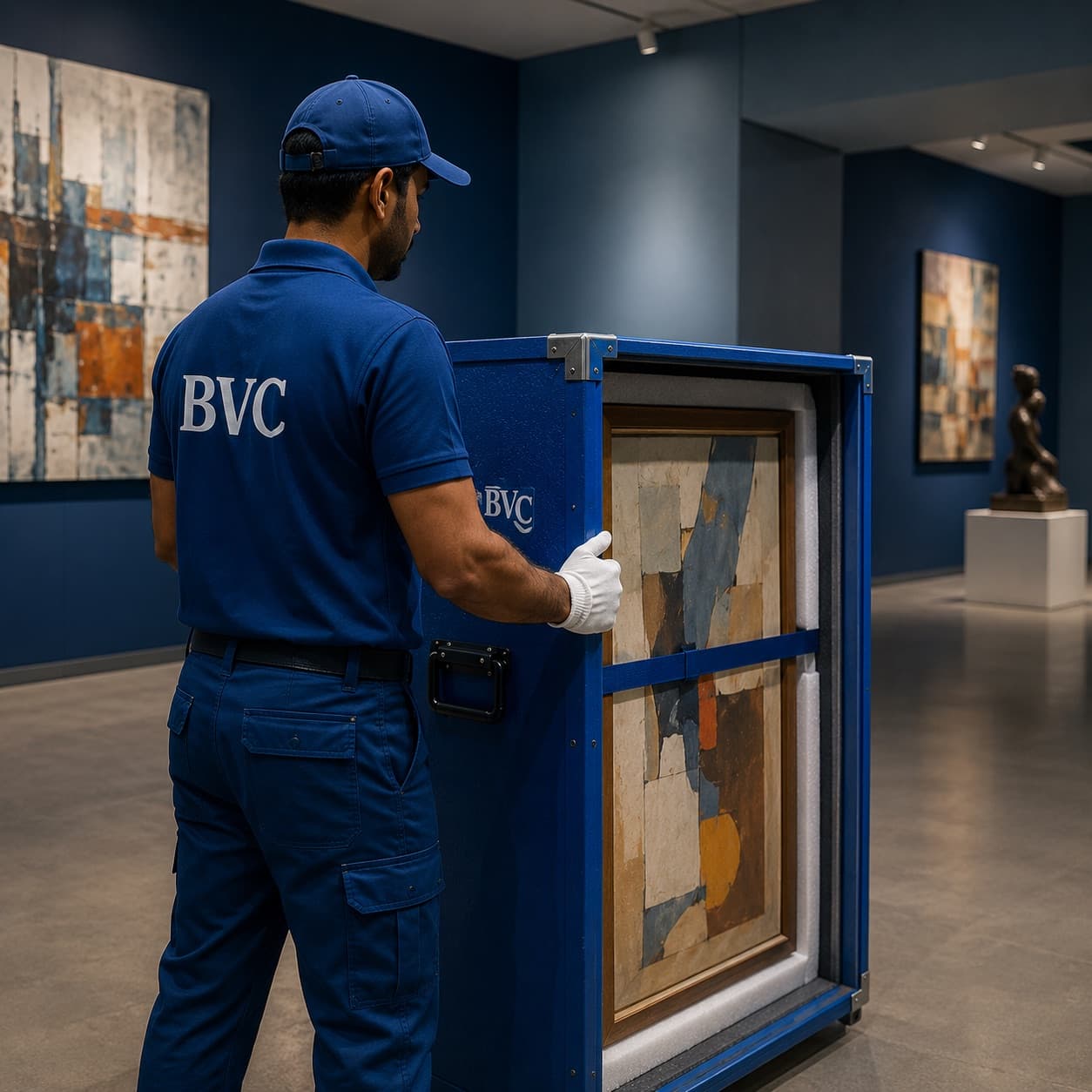
A white-gloved BVC handler placing a framed abstract painting into a padded blue BVC art crate inside an art gallery

Art Galleries & Dealers Logistics

How BVC handles artwork logistics for galleries and art dealers across India — so every piece reaches its next destination safely, on time, and exactly as it left.

View More...
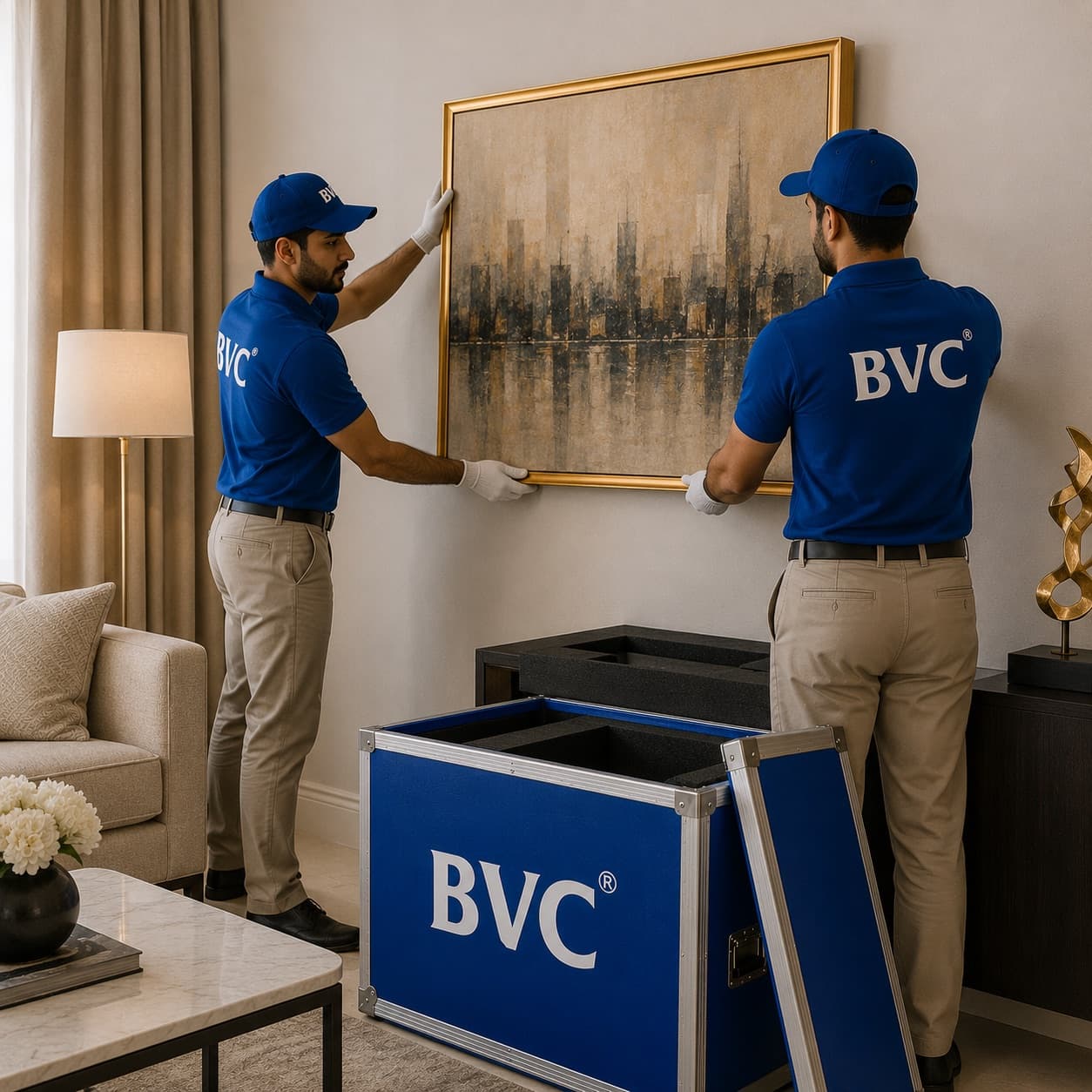
Two BVC crew members hanging a framed cityscape painting on a wall in a luxury home living room, with an open BVC crate alongside

Art Collector Home Installation

How BVC handles art collection logistics and home installation for private collectors in India — from the gallery wall to your living room, without a scratch.

View More...

Have Questions?
Find Your Answers Here

Everything you need to know about moving and installing art for museums and institutions with BVC. Can't find your answer? Reach out and our team will help.

Ask Your Question
  • Yes. We manage museum and institutional art loans be it domestic or international. We support with customs documentation for temporary import/export, condition reporting, packaging, delivery and installation within the institution.

Planning A Museum Loan, Travelling Exhibition, Or Institutional Art Move?

Talk to BVC's museum logistics team. We work with museums, cultural institutions, government bodies, and exhibition organisers across India to ensure every artefact and artwork is handled with the care it deserves.