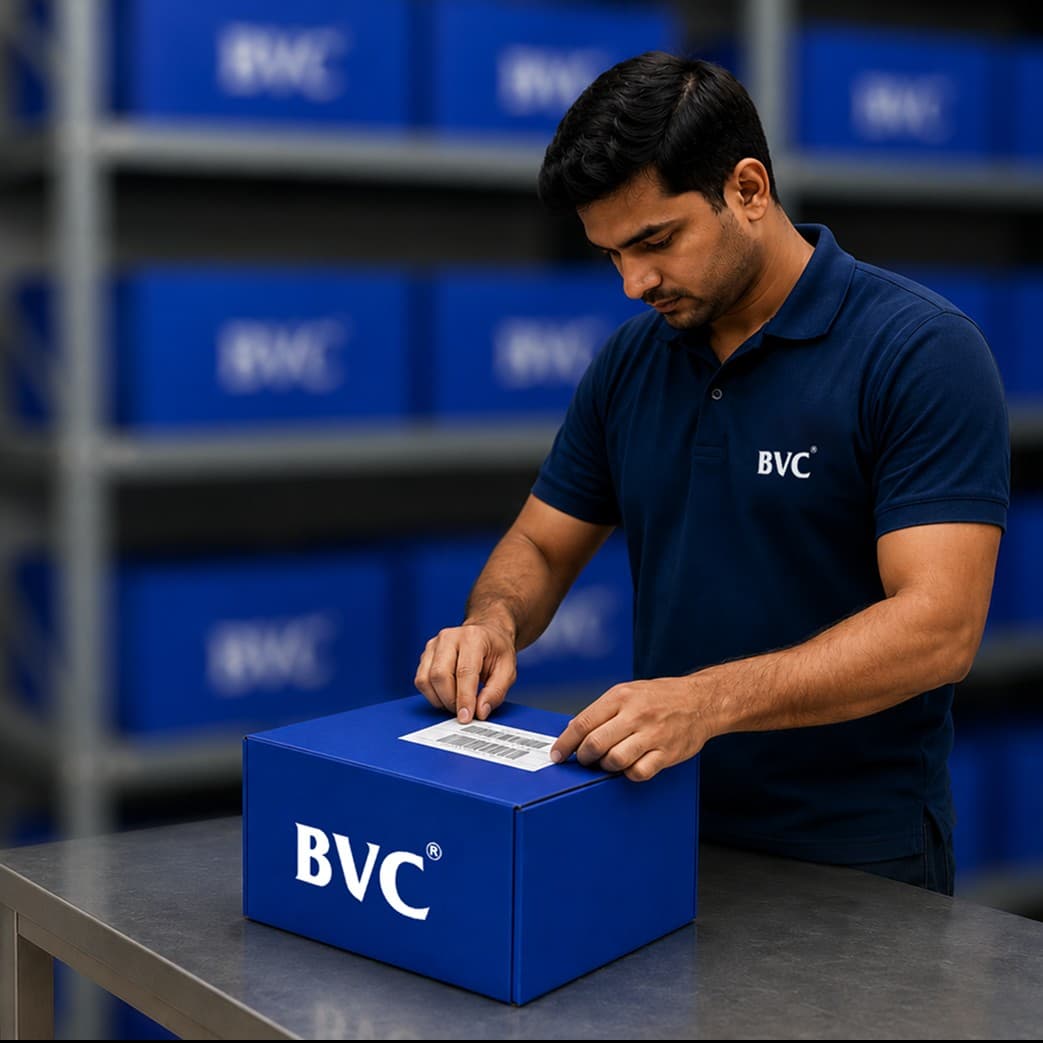
Test The Indian Market.
Pay Custom Duty Only On What Sells.

A foreign luxury brand was running a market pilot in India — unwilling to commit Custom duty upfront on stock that might never sell. We turned a single FTWZ (BVC's service unit) in SEZ into a three-way distribution engine.

9

Months of pilot from a single FTWZ (BVC's service unit)

3

Outbound flows: India, third-country, supplier

0

Indian customs duty on unsold inventory

VMI

Vendor-managed inventory model enabled

The Context — Why Most India Pilots Fail On The Exit

The Hard Part Of A Market Pilot Isn't Selling. It's Returning What Doesn't Sell.

Before the story, here is why "bring in a pilot consignment and see what sticks" is usually a more expensive experiment than it looks — and how an FTWZ (BVC's service unit) changes the shape of that experiment completely.

Think Of It Like This

A normal pilot import looks clean on paper. A brand sends a consignment to India, clears it into the domestic market on paying full custom duty and taxes, ships it to retail partners, and waits to see what sells. A year later, half the stock may still be sitting on retailers' shelves or bounced back to the brand's warehouse, and the custom duty has been paid on all of it.

Sending unsold custom duty-paid stock out of India means going through duty drawback — a paperwork-heavy recovery that takes months to process. So the brand ends up either discounting hard to clear inventory, or absorbing the custom duty as a write-down on the pilot. Either way, the exit is where the money gets lost.

An FTWZ (BVC's service unit) changes that shape entirely. Inventory held in the zone is treated as being outside India's tariff area — so custom duty and taxes are paid only on the pieces that actually sell and clear into the DTA territory. The rest can be re-exported at the end of the event, directly to a third-country buyer or back to the overseas supplier, with no Indian customs duty paid on any of it. The experiment becomes asymmetric: upside on what sells, no downside on what doesn't.

If the pilot is cleared as a standard import

Custom Duty Paid Upfront, Duty Stuck At Exit

  • Full customs duty payable on day one of arrival
  • Stock sitting with retail partners is already duty-paid
  • Unsold stock has to go through duty drawback to exit India
  • Recovery is slow, partial, and paperwork-heavy
  • Pilot economics carry the full downside of uncertainty

If the pilot is run through an FTWZ (BVC's service unit) in SEZ

Duty Follows The Sale, Not The Stock

  • Zero custom duty at import gateway — goods held at BVC's service unit vault
  • Sold pieces cleared piece-by-piece at point of sale only
  • Unsold stock re-exported without any liability
  • Third-country buyer can be served directly from FTWZ (BVC's service unit)
  • Vendor-managed inventory adjusts stock to real Indian demand

The Scenario

A 9-Month India Pilot Where The Unsold Stock Left The Country Cleaner Than The Sold Stock Arrived.

A European watch and fine-jewellery brand was ready to test India, but not ready to commit. They planned a nine-month pilot across a small group of Indian retail partners, with a parallel festive window lined up for the same stock in Dubai and Singapore if demand in India didn't convert. The question was how to set the logistics and customs side up so the brand could flex between those outcomes — without paying custom duty on stock that might never end up in an Indian customer's hands.

The ProblemScene 01

"We'll know in nine months what worked. Until then, we can't pay Custom duty on 1,200 SKUs."

The pilot consignment was 1,200 SKUs worth around 92 crore — a mix of watches, bridal jewellery, and diamond accessories. Clearing the whole thing into India as a standard import would have meant committing full customs duty on day one, across every SKU, regardless of whether it ever found an Indian buyer.

The brand's commercial team was explicit about two things: first, they wanted flexibility to redirect unsold stock to the Dubai and Singapore buyers already lined up for the festive window; second, they wanted the option to repatriate whatever remained to the European supplier without paying Indian custom duty twice — once at import, and again (in drawback overhead) at exit. A standard import couldn't give them either.

Why An Event Is Different From A Sale

A confirmed sale has a known destination. A pilot has three possible destinations — Indian retail, a third-country buyer, or the original supplier — and the brand genuinely doesn't know which SKU will end up where. Paying custom duty and taxes upfront forces the brand to pretend they know. FTWZ (BVC's service unit) lets the brand hold off on that decision until the SKU has actually moved, and applies the right customs treatment at that point.

They wanted a partner who could run the full event out of a single hub, handle all three outbound flows, and give them one reconciled view at the end — not three separate logistics projects stitched together after the fact.

What BVC Did — Step by StepScene 02

We Set The FTWZ (BVC's Service Unit) As One Hub With Three Possible Exits.

1

Received the shipment into the FTWZ (BVC's service unit) in SEZ

The 1,200 SKUs flew into Mumbai and moved under BVC secure transit, custom cleared and stored directly into the FTWZ (BVC's service unit) vault. Zero customs duty triggered — the consignment was legally outside India from the moment it arrived.

2

Stood up a vendor-managed inventory (VMI) view for the overseas HQ

The brand's European HQ got real-time piece-level visibility through BVC's warehouse management system. They could watch stock move, reshape the mix based on early demand signals from Indian retail partners, and top up specific lines without triggering a full re-import cycle.

3

Cleared each Indian retail order as a single-order customs transaction

When a retail partner in Mumbai, Delhi, Bengaluru, or Jaipur placed an order, BVC filed an SEZ customs clearance on that order — custom duty and taxes paid only on that specific batch of SKUs — and the custom-cleared stock moved out of the FTWZ (BVC's service unit) into the DTA territory. Sold SKUs became duty-paid Indian goods; the rest of the shipment stayed in our secure vault.

4

Delivered domestically through BVC's secure logistics network

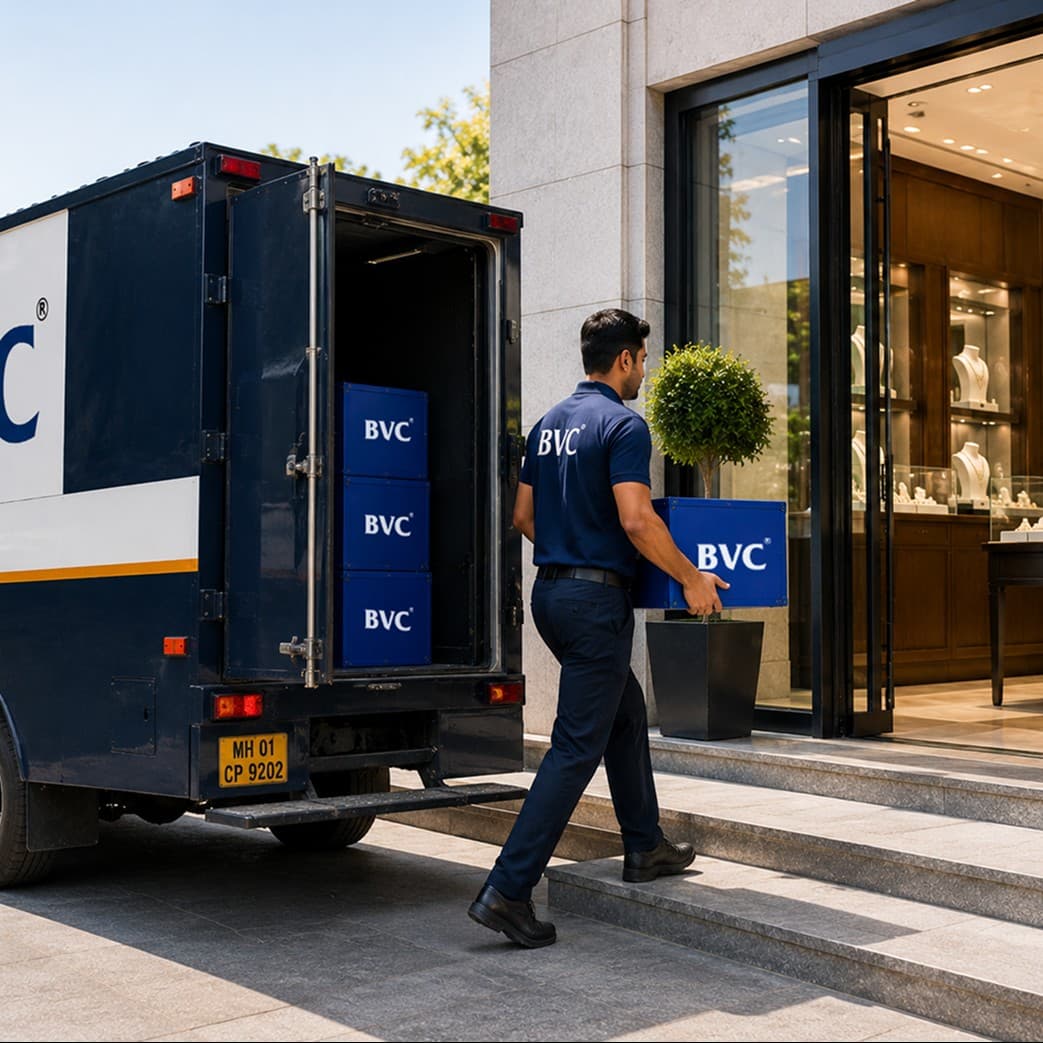
Cleared stock moved to the retail partners under BVC's tamper-evident, two-person-handover secure transit — the same infrastructure used for high-value jewellery and watch consignments across India. Deliveries to most metros were completed within 24 to 48 hours of clearance.

5

Planned the exit before the event closed — not after

With six weeks to event close, BVC ran a reconciliation against the WMS: what had sold, what was still in our secure vault, and what the brand wanted to do with each SKU. The answer came back in three parts — some would go to the Dubai buyer, some to Singapore, and the rest back to Europe, depending on the customer's requirement.

6

Exported directly to third-country buyers from the FTWZ (BVC's service unit)

For the SKUs going to Dubai and Singapore, BVC filed the Export Shipping Bill through the SEZ Online platform. The shipments were cleared through customs and shipped directly to the third-country buyers on a freely convertible currency settlement. No Indian customs duty and taxes, no domestic tariff area crossing.

7

Re-exported the balance to the origin

Remaining unsold SKUs were consolidated for re-export to the European supplier. BVC handled re-export documentation and international freight through its global logistics network. Again — without any custom duty and tax liability, because the goods had never legally entered DTA territory.

8

Handed over one reconciled report covering the full pilot

At event close, BVC delivered a single WMS-backed reconciliation file: inbound SKUs, Indian retail distribution (with piece-level custom duty paid), third-country export, and the balance re-exported to origin. Everything linked to an audit trail — ready for the brand's internal finance review and for the supplier's home-country tax filings.

What BVC Handles

  • SEZ bonded entry & piece-level WMS onboarding
  • Vendor-managed inventory visibility for overseas HQ
  • Order-level SEZ clearance for Indian retail
  • Secure domestic last-mile to retail partners
  • Export & Re-export Shipping Bill via SEZ Online platform
  • SEZ customs examination for re-export
  • International freight for return shipments
  • End-of-event reconciliation across all three flows
The Three Outbound FlowsScene 03

One FTWZ (BVC's service unit). Three exits. Each with its own customs treatment.

Indian Retail

IN

Domestic Distribution · 4 Cities

Around 720 SKUs cleared piece-by-piece from the FTWZ (BVC's service unit) into Indian retail partners across Mumbai, Delhi, Bengaluru, and Jaipur over the 9-month window. Custom duty paid only on each confirmed order, not on the full consignment.
Dubai Buyer

UAE

Third-Country Re-Export

Around 310 unsold SKUs shipped directly from the FTWZ (BVC's service unit) to a third-country buyer in Dubai, ahead of their festive window. Export Shipping Bill filed via SEZ Online; settlement in freely convertible currency; zero Indian custom duty and taxes.

European Supplier

EU

Repatriation · Consolidated

Around 170 SKUs consolidated for secure return to the overseas supplier in Europe. Export documentation handled by BVC; freight consolidated to reduce cost; inventory reintegrated into the supplier's home-country stock.

OutcomeScene 04

The Pilot Converted Into A Full Launch — And The FTWZ (BVC's Service Unit) Stayed In Place As The Permanent Hub.

The sell-through on the Indian side was strong enough to justify a full market launch. Instead of pulling the FTWZ setup down, the brand kept it in place — same bonded vault, same VMI feed from European HQ, same piece-by-piece custom duty clearance model — and scaled it up. New collections now flow into the same hub, and the three exits (Indian retail, third-country buyers, supplier returns) remain standing options, not one-time exercises.

This is the real value of FTWZ (BVC's service unit) for a foreign brand entering India. It isn't a warehouse. It's a commercial operating model — one that separates the physical logistics of inventory from the tax event of sale, and lets the brand commit capital only when the market commits back.

OUR USE CASES

Check Other Use Cases

View All Use Cases
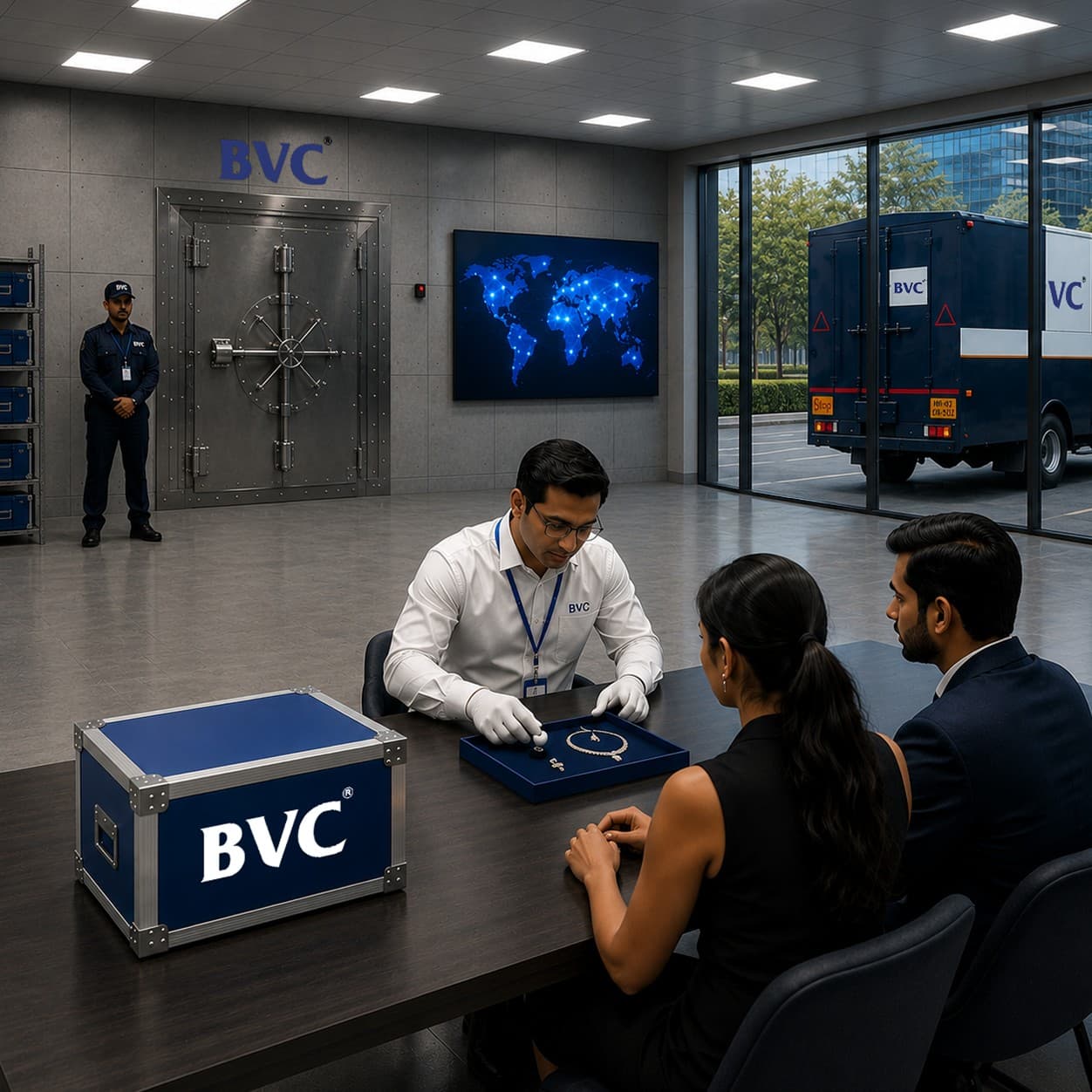
A BVC officer in white gloves presenting jewellery on a navy tray to two clients across a table in a secure viewing centre, with a BVC vault, blue BVC crates, a world-map wall and a blue BVC truck behind

The jewellery is already in India. But the customs duty isn't.

A global luxury house wanted to showcase a high-value collection to clients across India without clearing every piece into the domestic market first. Inside BVC's FTWZ SEZ, the collection was displayed in secure viewing centres, shown at client events, and cleared one piece at a time, only when a sale was actually confirmed.

Learn More

Have Questions?
Find Your Answers Here

Everything you need to know about running an India market pilot through an FTWZ in SEZ with BVC. Can't find your answer? Reach out and our team will help.

Ask Your Question
  • An FTWZ (BVC's service unit) is a Free Trade and Warehousing Zone — a customs-bonded facility inside a SEZ. Stock held there is treated as being outside India's tariff area, so custom duty and taxes are triggered only when goods are cleared into the Domestic Tariff Area (DTA). A normal warehouse holds duty-paid goods; an FTWZ lets you defer that duty until each piece actually sells.

Running An India Pilot? Set It Up So The Exit Is As Clean As The Entry.

Tell us the size of the consignment, your expected Indian retail footprint, and whether you have third-country or supplier-return flows lined up. We'll design an FTWZ SEZ pilot that pays duty only on pieces that sell — and moves the rest out of India duty-free, directly to the buyer or supplier.