Precious Metal Recovery Logistics: Moving Industrial Gold & Silver Scrap To Refineries

We manage the secure collection and transport of gold and silver byproducts from factories and industrial units to refineries for metal recovery

Understanding Industrial Byproduct Logistics

A Factory's Sweepings, Dust, And Rejects Can Hold Real Recoverable Value

Modern manufacturing uses gold and silver in quantities small enough to be invisible in any one component — a few micrograms in a semiconductor bond wire, a thin layer of silver in a solar cell contact, a plating deposit on a medical device connector. Multiplied across millions of units and months of production, those invisible quantities add up to kilograms of recoverable metal sitting in industrial scrap, dust, sludges, and reject parts. Moving that material from the factory floor to a refinery is a logistics discipline in its own right.

Industrial byproducts are not like jewellery scrap. The metal is locked inside other materials — silicon wafers, ceramic substrates, polymer boards, plating sludge, spent electrolyte. Weights at the factory reflect the full material, not the recoverable metal content, which only becomes clear after the refinery's assay. This creates a specific logistics demand: every gram of material that leaves the factory must be the same gram of material the refinery weighs in — because the refinery's assay on that material determines the client's recovery payment.

The material itself is often difficult to handle. Fine dust from grinding and polishing can disperse if not sealed correctly. Plating sludges and spent solutions are liquids or semi-solids that need leak-proof containment. Mixed-form scrap — reject boards plus polishing residue plus anode remnants — needs separate packaging and documentation so the refinery can treat each stream correctly. A generic high-value courier is not built for any of this. Industrial byproduct logistics is a precious metals problem, a hazardous-form problem, and a compliance documentation problem at the same time.

"For an industrial user, the refinery's assay report is the moment of truth. Everything the logistics partner does — from weighing the first drum at the factory to sealing the last packet at dispatch — is about making sure that report is clean."

At BVC, we manage industrial byproduct recovery logistics as a specialist flow. Collection from the factory floor with specialised handling for dust, scrap, liquids, and mixed materials. Packaging designed for each byproduct form. Secure, monitored transport to licensed refineries across India. Chain-of-custody documentation that supports the refinery's assay, the client's GST position, and internal audit. Where needed, secure vault holding before refinery dispatch or after recovery. End-to-end — from the production line to the recovered bullion.

Who We Serve — 01

Electronics & Solar Manufacturers

Semiconductor units, PCB manufacturers, and solar cell producers generating gold and silver residue in bonding, plating, and contact layers — recovered from production scrap and reject material.

Who We Serve — 02

Engineering & Medical Devices

Precision engineering units and medical equipment manufacturers using gold and silver in contacts, sensors, and critical components — where production offcuts and reject parts carry recoverable metal.

Who We Serve — 03

Chemical & Plating Industries

Electroplating plants, catalyst users, and specialty chemical producers generating precious metal in sludges, spent solutions, filter residues, and anode remnants — requiring specialised handling for recovery.

Approach Comparison

What Goes Wrong In Byproduct Logistics — And How BVC Does It Differently

Industrial byproduct movement is often treated as a waste disposal problem, not a precious metals logistics problem. Here is what typically goes wrong — and what BVC does instead.

Handling Mixed Material Forms

Common Problem

An electronics manufacturer generates three byproduct streams — fine grinding dust, reject PCB boards, and plating sludge. A general industrial transporter packs all three into the same consignment using standard cardboard drums. Dust mixes with sludge. The refinery receives a contaminated lot and has to run additional pre-treatment before assay — delaying recovery and reducing yield.

BVC Way

BVC uses material-specific packaging for each byproduct stream — sealed dust-containing drums for fine residues and rigid containment for reject boards.

Containment For Dust And Liquids

Common Problem

A plating unit dispatches 80 litres of precious-metal-bearing spent electrolyte in a second-hand chemical drum. The drum's seal is not leak-proof under road vibration. Several litres leak in transit. The refinery receives a partial quantity — and the lost volume carried silver that cannot be recovered.

BVC Way

BVC uses leak-proof, tamper-evident containment designed for precious-metal-bearing remains. Packages are sealed and validated for road transport. What leaves the factory is what the refinery opens — no in-transit loss.

Documentation For Refinery Assay

Common Problem

A manufacturer's byproduct batch reaches the refinery with only a generic delivery note. The refinery requires per-stream records — material type, estimated quantity, source process, factory weight, and transport chain-of-custody — before it assays and settles. The consignment waits in the refinery's queue for days while the client reconstructs the paperwork.

BVC Way

Every byproduct consignment is dispatched with complete documentation the refinery expects: per-stream records, source process reference, factory weights, transit custody log, and unique consignment IDs. Refinery assay and settlement proceed without paperwork delays.

Security For High-Value Industrial Scrap

Common Problem

A manufacturer treats byproduct dispatch as industrial waste movement — standard truck, no GPS tracking, no secure handling protocol. On inspection, the recoverable metal content of the batch runs into several kilograms of silver equivalent. The insurance cover the manufacturer has on the consignment is a generic goods policy that does not reflect the actual metal value. A loss event would not be covered at recovery value.

BVC Way

BVC transports industrial byproducts with the security posture the recoverable metal content demands — GPS-tracked vehicles, controlled routes, control room monitoring, and insurance valued at the declared value of metal content. The security and cover align with what is really in the drum.

How It Works

From Production Line To Recovered Bullion — Every Step

Click each step to understand what BVC does at that stage of the industrial byproduct recovery flow.

BVC collects gold and silver byproducts directly from the industrial site — production scrap, reject parts, polishing dust, grinding residue, plating sludge, spent electrolyte, filter cake, anode remnants, and other precious-metal-bearing material. Pickup is scheduled around the client's production and accumulation cycle.

At pickup, material is accepted by stream — dust separate from reject boards, sludges separate from solids — so that each stream can be packaged, documented, and routed correctly through to refinery intake.

What Planning Covers

  • Stream-wise acceptance of byproducts
  • Calibrated weight check — witnessed
  • Source process reference recorded
  • Pickup receipt signed at factory gate
  • Unique consignment identifier assigned

What BVC Brings

Capabilities Built For Industrial Byproduct Recovery

Understand what each capability means for manufacturers and industrial units recovering gold and silver from production byproducts.

01.

Specialised Handling For Complex Materials

Safe transport of dust, scrap, liquids, and mixed materials.

BVC's purpose-built protocols cover every byproduct form — fine dust and grinding residue, reject parts and solid scrap, plating sludges and spent electrolyte, mixed-purity material. Containment is selected per stream so the form of the byproduct does not compromise the quantity that reaches the refinery.
02.

End-To-End Secure Logistics

From industrial site to refinery and beyond.

From factory gate pickup through transit, refinery delivery, and optional bullion return, BVC manages the complete byproduct recovery flow. One partner handles every link — so the client is not coordinating three providers and hoping the paperwork matches up at each handover.

03.

Real-Time Tracking & Visibility

Every consignment, every stream — visible in real time.

Complete shipment tracking at every stage through BVC's portal — pickup, in transit, refinery intake, assay status, and (where applicable) bullion return. Client operations and finance teams see the same real-time view, without chasing updates over email.

Indian Regulatory Context

What Industrial Byproduct Logistics Has To Work Within

Byproduct movement sits at the intersection of precious metals rules, GST, and — for certain streams — hazardous and e-waste handling regulation. Getting the logistics documentation right is what keeps the client's tax, audit, and environmental compliance position clean.

GST On Precious Metal Byproducts

Movement of precious-metal-bearing scrap and byproducts to a refinery is a taxable supply under GST. The valuation is benchmarked to IBJA rates for the estimated metal content. BVC's documentation formats support the client's GST invoicing and input tax credit position on byproduct dispatch and bullion return.

E-Way Bills For Byproduct Movement

Inter-state movement of byproducts above Rs. 50,000 requires an e-way bill. Several states have notified intra-state e-way bill requirements for precious metals above Rs. 2 lakh under CGST Rule 138F. BVC generates the correct e-way bill for every byproduct movement where the thresholds are met.

E-Waste Rules 2022 Interface

PCBs, semiconductor assemblies, and electronic reject components can fall within the E-Waste (Management) Rules, 2022 when classified as e-waste. Transport documentation must reflect the correct regulatory classification where applicable. BVC structures documentation to work alongside the client's EPR and authorised recycler obligations.

Hazardous Waste Handling Where Applicable

Certain byproduct streams — plating sludges, spent electrolytes, filter cakes — can be classified as hazardous waste under the Hazardous and Other Wastes Rules, 2016, requiring authorised handling and documentation. BVC's packaging and documentation align with this framework where applicable, without compromising the precious metals logistics layer.

Licensed Refinery Acceptance Standards

Licensed Indian refineries, including LBMA-accredited facilities like MMTC-PAMP, accept byproduct material only with complete supplier and transport documentation — supplier identity, source process, per-stream records, and chain-of-custody. BVC's documentation meets refinery intake expectations on the first pass, keeping assay and settlement cycles on track.

IBJA Rate Benchmarking For Valuation

India Bullion and Jewellers Association (IBJA) gold and silver rates are the standard benchmark for byproduct valuation, insurance coverage, and refinery settlement in India. Every BVC byproduct consignment is insured and invoiced at the day's IBJA rate applied to the estimated recoverable metal content — aligning documentation, insurance, and settlement values.

Our Industries

Check Other Industries

Explore Gold & Silver Logistics
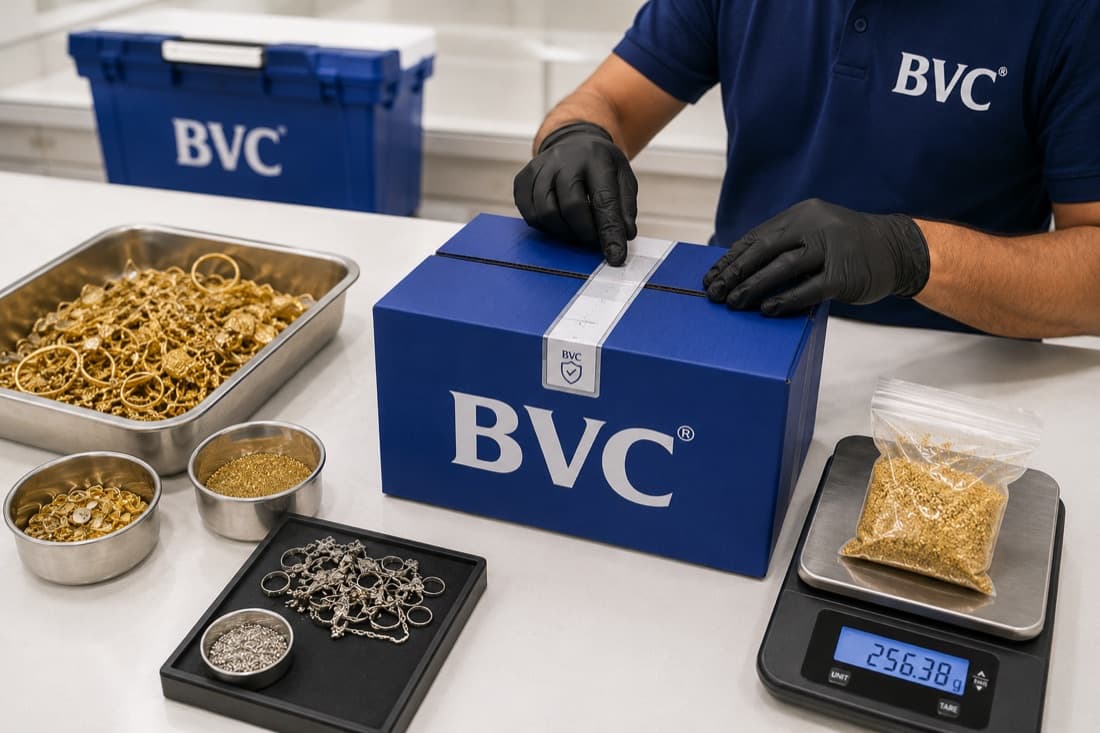
Gloved BVC handler sealing a BVC box beside trays of scrap gold and silver jewellery on a weighing scale

Scrap Gold Recovery Logistics

Secure collection, consolidation, and movement of scrap gold and silver from businesses to refineries — tamper-proof, fully insured, and documented.

View More...
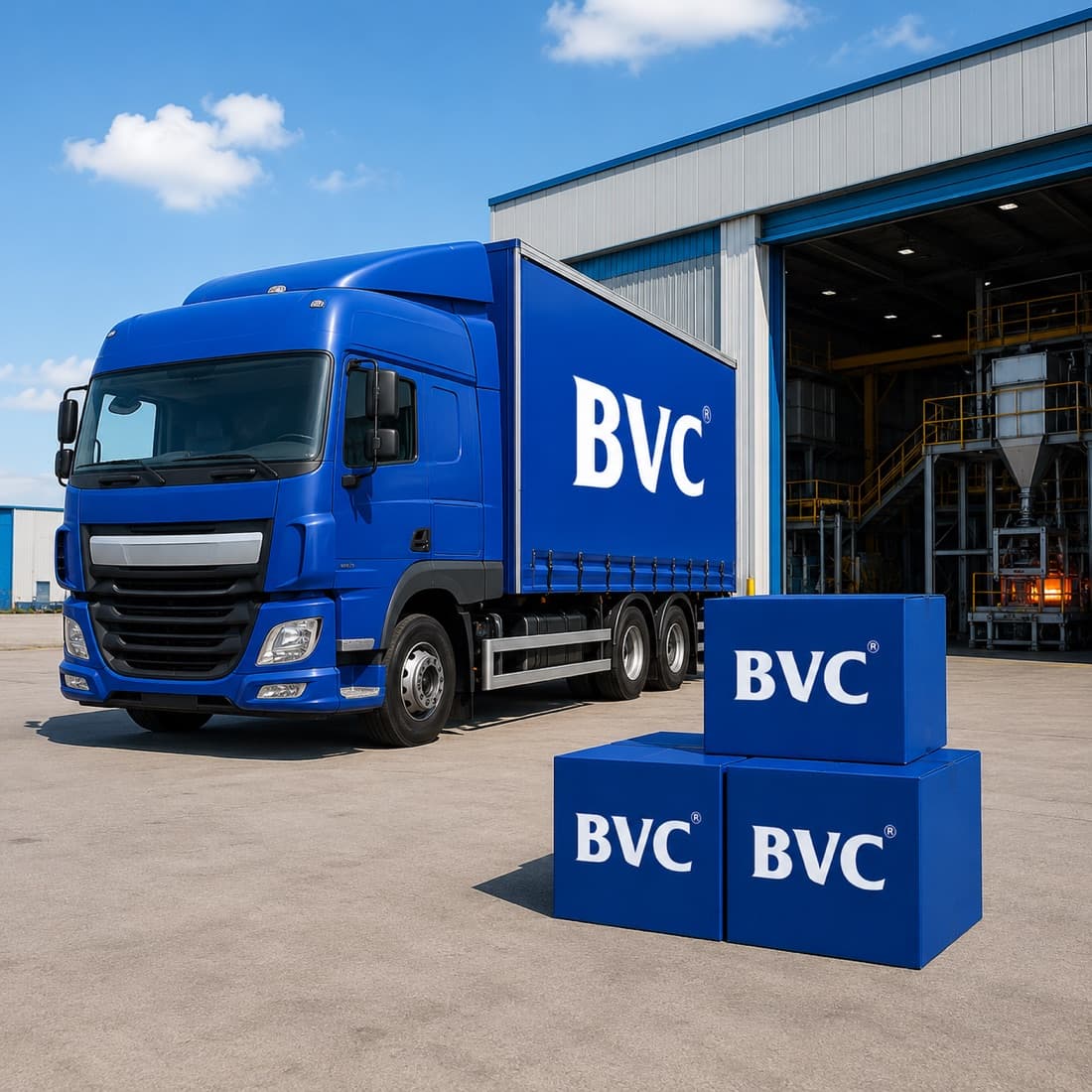
BVC truck and stacked BVC boxes outside a refining and smelting facility

Refining & Smelting Logistics

End-to-end bullion movement for refining and smelting operations across India — from raw material pickup to final bullion delivery.

View More...
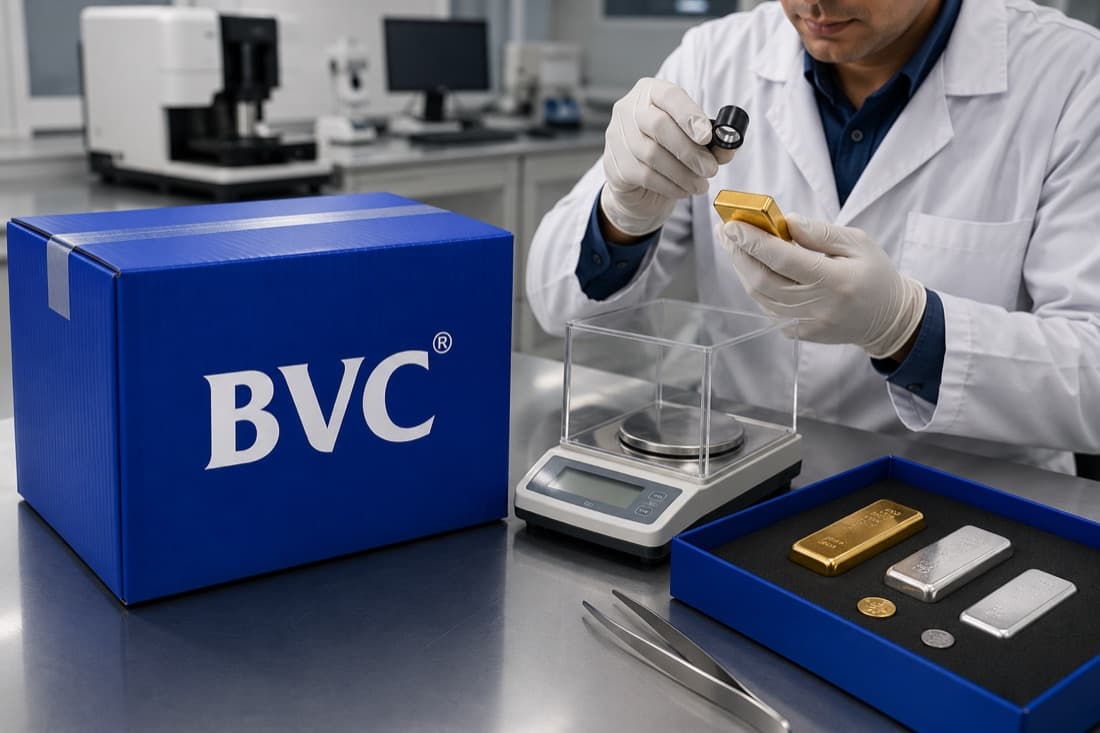
Lab technician inspecting a gold bar with a loupe beside a precision scale, gold and silver bars and a sealed BVC box

Purity Testing Lab Logistics

Secure round-trip logistics for gold and silver assay, certification, and BIS hallmarking across India — for jewellers, manufacturers, and bullion dealers.

View More...

Have Questions?
Find Your Answers Here

Everything you need to know about recovering gold and silver from industrial byproducts with BVC. Can't find your answer? Reach out and our team will help.

Ask Your Question
  • BVC handles every common precious-metal-bearing byproduct form — production scrap and reject parts, polishing dust and grinding residue, plating sludges and spent electrolyte, filter cake, anode remnants, and mixed-purity material from electronics, solar, engineering, medical device, plating, and chemical units. Each stream is accepted, packaged, and documented separately.

Talk To An Industrial Byproduct Logistics Specialist

We work with electronics manufacturers, solar producers, medical device makers, plating plants, and engineering units recovering gold and silver from production byproducts across India — with specialised handling, secure transport, and full documentation end-to-end.