
Business Type 01
Component Makers
Businesses that make chains, clasps, findings, hooks, locks, and small jewellery parts for the next stage of work.
Example: A clasp maker in Mumbai sending lots to jewellery workshops in Jaipur and Surat.
Helping businesses move small jewellery parts across India with tracking, clear records, and reliable delivery.
600+
Cities Across India Served
12,000+
Pincodes In BVC's Delivery Network
30%+
Of India's Jewellery Market Now Organised Retail Chains
100%
Tracked End-To-End With Proof Of Delivery
Why Component Logistics Is Different
Jewellery component makers do not always ship finished jewellery. They often ship the parts that help finished jewellery get made — chains, clasps, locks, hooks, findings, and other small pieces used in making and finishing jewellery.
These parts may be small, but they matter a lot. A single delayed lot can bring an entire workshop to a halt. If one lot arrives late, production may stop. If the wrong lot reaches the wrong place, the receiving team may waste time checking and sorting through pieces. If there is no clear proof of handover, the business may struggle to know what was sent, what was received, and who is responsible.
This matters a lot in India, where jewellery component makers supply to many different business points — all within the same city. A component maker may send lots to nearby workshops, jewellery brands, assembly units, wholesalers, or manufacturing locations. Chains, findings, clasps, and small parts move hands multiple times before they become part of a finished piece, and each handover needs to be smooth, recorded, and reliable.
BVC helps jewellery component makers move chains, findings, clasps, and small parts safely within the city — with secure pickup, full tracking, documented handovers, and reliable delivery to the next business point, so that every lot reaches the right place at the right time without any confusion or delay.
“A small jewellery part can hold up a much bigger order. That is why its delivery has to be clear, safe, and on time.”
Who This Serves
BVC supports different types of jewellery component businesses across India. The shipment may change, but the need stays the same: move the right lot, to the right place, with clear proof.
Business Type 01
Businesses that make chains, clasps, findings, hooks, locks, and small jewellery parts for the next stage of work.
Example: A clasp maker in Mumbai sending lots to jewellery workshops in Jaipur and Surat.
Business Type 02
Suppliers that regularly send parts to workshops and jewellery makers who need them on time to keep production moving.
Example: A findings supplier dispatching daily lots to assembly units in different cities.
Business Type 03
Businesses moving component lots between factories, workshops, warehouse points, partner units, and customer locations.
Example: A jewellery brand moving component stock between a central warehouse and several production partners across India.
Approach Comparison
Component shipments may look simple, but they often sit inside a bigger production flow. That is why the movement needs more care than a normal parcel service.
The packet is small, so it is treated like a basic parcel. The handling does not match how important the contents really are.
We treat jewellery component lots as important business shipments with secure handling, tracking, and proof of handover.
The shipment reaches the destination, but the count or lot details do not match what the receiver expected.
We support clear shipment records and handover proof so businesses have a better view of what moved and what reached the destination.
The delivery is treated like a normal parcel even when a workshop is waiting for it to continue work.
We plan around business need and delivery timing, not just a basic transport window.
Lots move between makers, workshops, factories, buyers, and warehouses as separate dispatches. Visibility becomes weak.
We support multi-point movement under one clearer logistics plan so the business sees a more controlled flow.
Later, it becomes hard to show what was sent, where it went, and when it was received.
Documented handovers and delivery records help create a clearer movement trail.
How It Works
This section answers a simple question: how do chains, findings, clasps, and other jewellery parts move safely from one place to another? Click each step to see what happens and why it matters.
Every shipment has a reason behind it. A lot may be going to a workshop for assembly, to a factory for production, or to a buyer for the next stage. That means timing matters.
We plan pickup and delivery around dispatch readiness and receiving needs so the shipment supports the workflow instead of slowing it down.
Every shipment has a reason behind it. A lot may be going to a workshop for assembly, to a factory for production, or to a buyer for the next stage. That means timing matters.
We plan pickup and delivery around dispatch readiness and receiving needs so the shipment supports the workflow instead of slowing it down.
What Is Aligned First
What BVC Brings
Understand what each capability means in everyday business terms.
01.
A stronger way to move small but valuable shipments.
Chains, clasps, findings, and similar parts may be small, but they can still be valuable and important for production. BVC handles them as controlled business shipments, not basic parcels.
02.
Better visibility across cities and business points.
Whether the lot is moving within one city or across India, BVC supports real time tracking and clearer status updates so the business can plan around real shipment progress.
03.
Clearer proof from pickup to delivery.
BVC supports handover records with signature and delivery proof so businesses have a better trail showing what moved, where it went, and when it was received.
India Angle And Regulatory Context
Jewellery components travel through multiple checkpoints in India. That makes clear movement and proper records very important.
A self-attested copy of the GST e-Invoice must accompany every consignment of gold and silver jewellery, irrespective of the type of movement. Checkpoint officers rely on this document to verify the sender's tax identity before any other paperwork is examined. BVC attaches this to every consignment file by default.
For branch-to-branch movement of jewellery within the same state, a Delivery Challan under Rule 55 of the CGST Rules 2017 is the correct document — not a tax invoice, because no supply has taken place. The challan must carry the reason (“branch transfer”), the value, and the identifiers of both branches.
A Delivery Challan under Rule 55 of the CGST Rules 2017 travels with every high value shipment, without exception. It records what is physically leaving the premises, its value, and where it is going — irrespective of whether a sale is happening, whether it is an internal transfer, or whether the piece is going for repair. Customer generates this challan at the point of dispatch for every single shipment.
When jewellery is moved between branches across state lines, GST treats it as a taxable supply. A GST Invoice for Stock Transfer under Rule 46 of the CGST Rules 2017 is mandatory, and IGST applies even though no external sale has occurred. BVC structures these inter-state branch transfers with the invoice, the e-way bill, and the matching insurance declaration as one packet.
A No Sale Declaration of Goods accompanies every jewellery shipment to formally state that the movement itself is not a sale transaction. This protects the jeweller from the consignment being mistaken for an undeclared taxable supply at a checkpoint, and it clarifies the intent of the movement for any officer inspecting the goods in transit. BVC attaches this declaration by default to every consignment file.
On top of the baseline paperwork, an E-Way Bill is required for inter-state jewellery movement above the prescribed threshold, and for intra-state movement in states that have notified e-way bill requirements for precious metals under CGST Rule 138F. BVC tracks which states have notified this requirement and generates the e-way bill wherever applicable.
The correct HSN code must appear on every GST invoice and every delivery challan that moves with a jewellery consignment. Gold jewellery, silver jewellery, coins, bars and studded pieces each have their own HSN classification, and the code dictates the applicable GST rate and the audit treatment of the consignment. A missing or incorrect HSN is one of the most common reasons a jewellery shipment is held up at a checkpoint or flagged in a post-audit review.
Our Industries
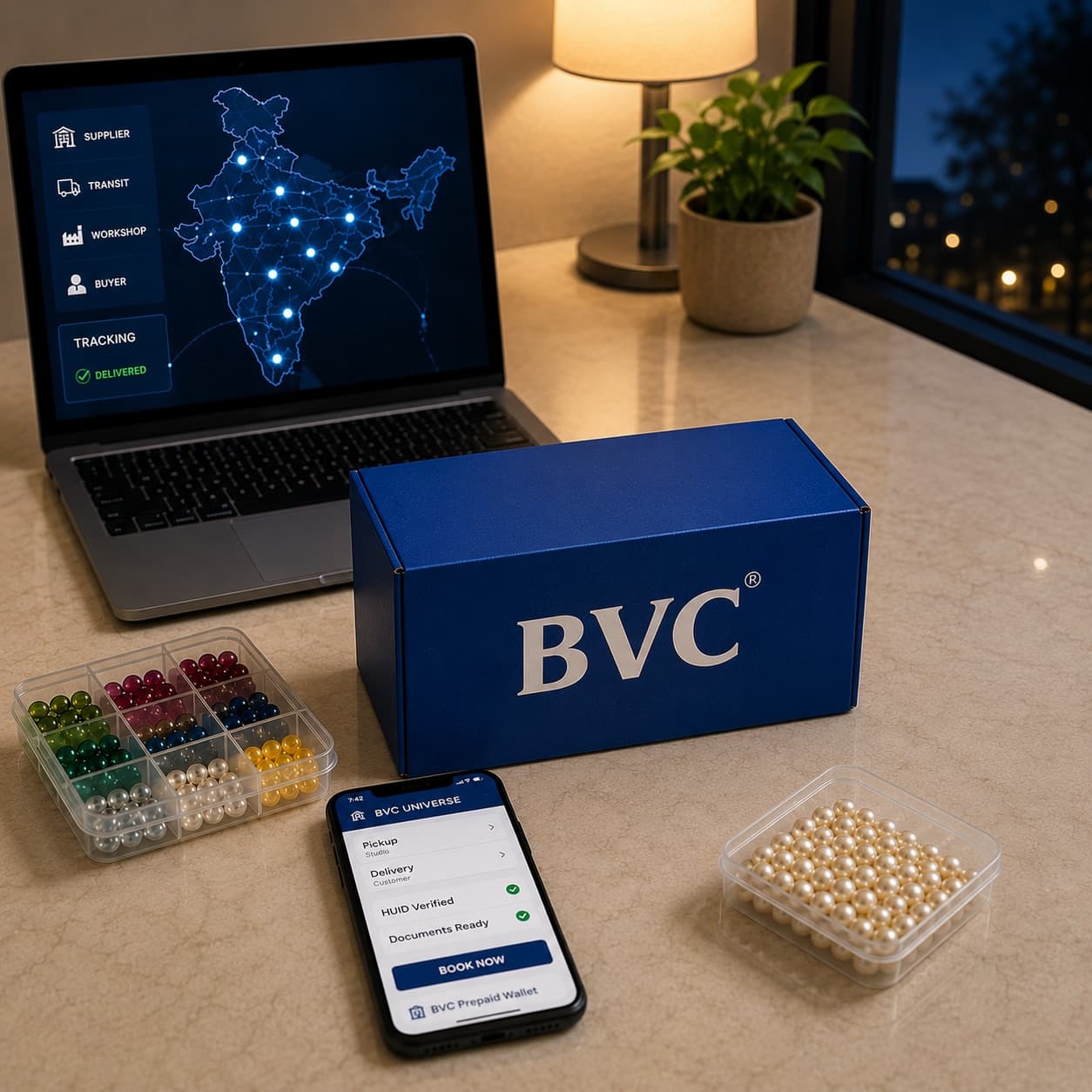
Moving coloured stones and pearls smoothly between suppliers, buyers, and workshops across India with tracking and reliable delivery.
View More...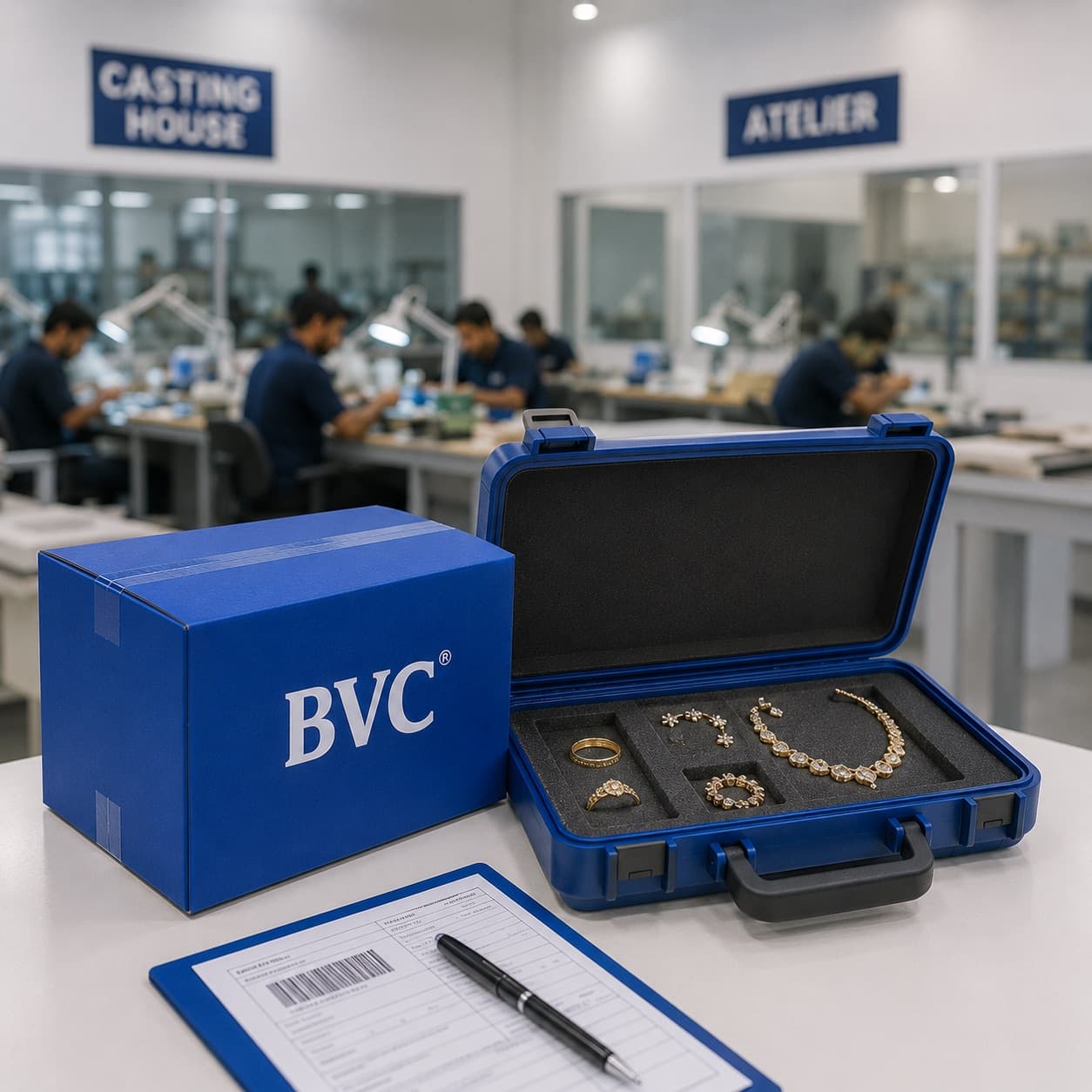
Moving work-in-progress jewellery between casting houses and ateliers across India with tracking, clear records, and reliable delivery.
View More...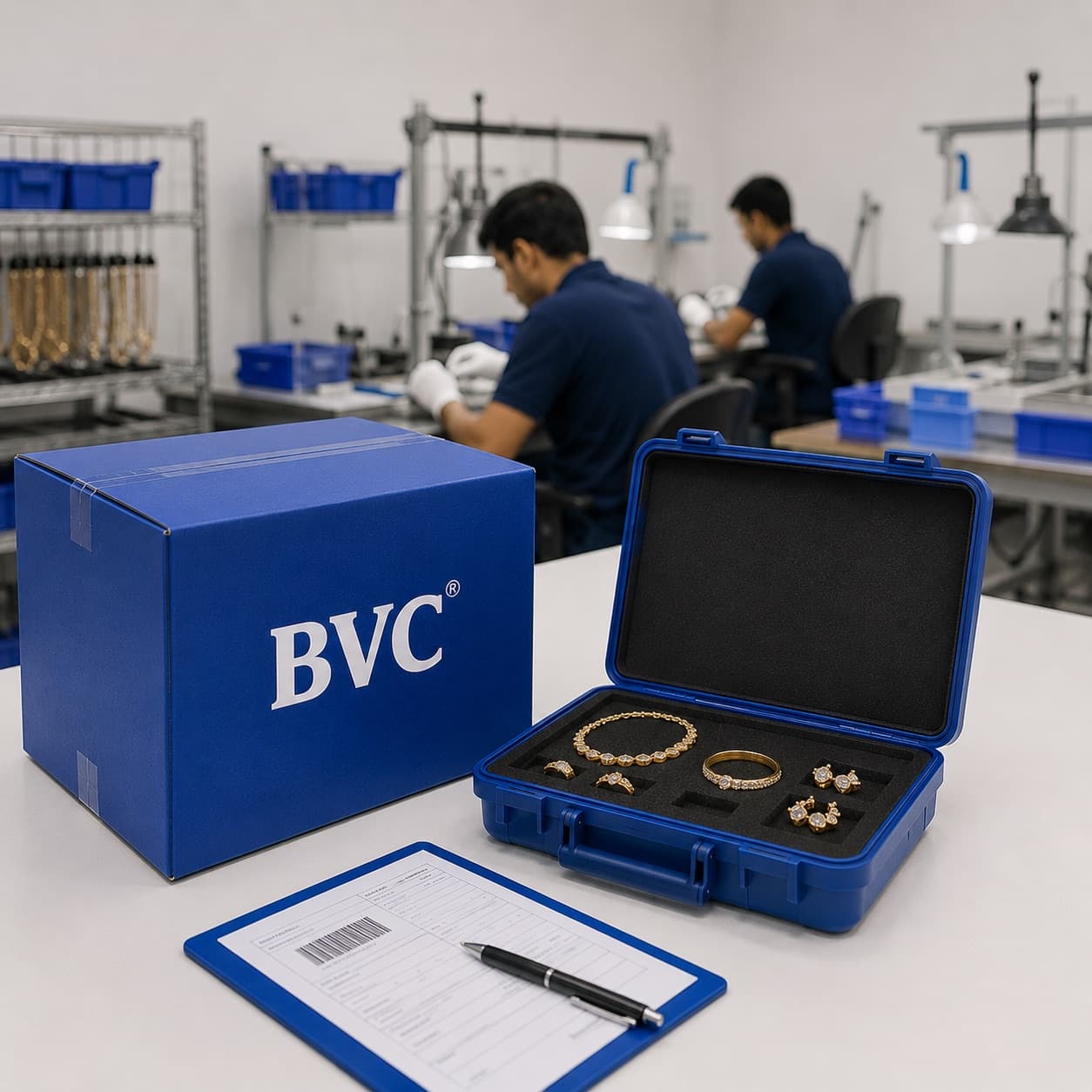
Moving jewellery through electroplating, finishing, polishing, and quality check across India with tracking and reliable delivery.
View More...Everything you need to know about moving jewellery components with BVC. Can't find your answer? Reach out and our team will help.
Ask Your QuestionYes. Component movements — whether gold chains by the kilogram, silver findings in bulk, or mixed clasp assortments — are handled as high-value cargo with full documentation and insurance, regardless of the format.
Whether you move chains, clasps, findings, or other small jewellery parts across workshops, factories, brands, and buyers, BVC can help you build a safer and simpler movement plan.