
1
Mapped every pickup location before movement
BVC first created a store-wise pickup plan with the retailer. Each store name, address, contact person, expected parcel count and refinery destination were mapped before the first pickup started.
Moving old gold, scrap gold, exchange gold, and buyback stock from multiple stores to a refinery requires precise records, proper documentation, and coordination — and BVC ensures exactly that.
−1 Day
Single Point Of Contact For All Stores
6 PM
Store-Wise Lot Identity Maintained
12 PM
Shipment Visibility And Control
Daily
Insurance Cover Available Door-To-Door
The Context — Why Old Gold Movement Becomes Complicated
A retailer may know exactly how much old gold is sitting in each store. But collecting it from many locations and sending it to a refinery needs more than a driver. It needs counting, sealing, store-wise records, safe movement, and a clean handover trail.
A jewellery chain runs 18 stores across Mumbai, Pune, Nashik, Surat, Ahmedabad and Vadodara. Over the month, each store collects old gold from customers through exchange and buyback. Now the chain wants to send all of it to one refinery for melting, purity check and further processing.
On paper, this sounds simple: collect old gold and send it to the refinery. On the ground, it becomes difficult very quickly. One store may have two parcels, another may have eight. Some parcels may be high value. Some may need special documentation. The refinery will not accept confusion. What leaves each store must match what reaches the refinery.
That is where BVC fits in. The customer does not have to coordinate different pickups, different vehicles, different branches and different people. BVC becomes one control point for the full old gold journey — from store pickup to refinery delivery.
If The Retailer Manages It Alone
If BVC Manages The Movement
The Problem
A jewellery retail chain had old gold collected across stores in Maharashtra and Gujarat. The finance team wanted the gold sent to a refinery quickly so the value could be processed and reconciled. The operations team had one concern: how do we collect from so many stores and still prove what came from where?
We cannot ask every store to send old gold on its own. We need one accountable partner.
The chain had old gold sitting in 18 stores. Some stores were in metros. Some were in nearby cities. The quantities were not equal. One store had a small parcel from customer exchanges. Another had multiple parcels collected over two weeks. Every parcel had value, and every value had to be accounted for.
The customer could not send store staff with the gold. They could not trust local courier routes. They also did not want the refinery to receive mixed parcels with unclear origin. If the refinery found a mismatch, the question would come back to the retailer: which store sent this, who handed it over, and what was the recorded weight?
Why Old Gold Movement Creates Disputes
Old gold is usually collected over time, across different counters and branches. If parcel count, weight, seal number, store reference and handover proof are not recorded properly at the start, the dispute appears later at the refinery gate. By then, it is hard to prove where the gap happened.
The retailer needed one partner who could collect from all stores, maintain store-wise identity, consolidate safely, and deliver to the refinery with records the finance, operations and refinery teams could all trust.
BVC created one controlled old-gold movement from many stores to one refinery.
BVC first created a store-wise pickup plan with the retailer. Each store name, address, contact person, expected parcel count and refinery destination were mapped before the first pickup started.
At each store, the BVC pickup team verified parcel count and documents. Parcel weight and condition could be checked. The pickup was recorded at the store level so the lot did not become anonymous.
Every parcel was labelled and sealed with a unique ID. The ID was linked to the store, dispatch docket number, parcel count, documents and refinery destination. This made each parcel traceable even after consolidation.
Lots from different stores were kept separately identified. Physical separation avoided mixing. Digital records ensured the system could confirm which parcel belonged to which store at every stage.
After store pickups were completed, BVC consolidated the parcels at a secure location. Consolidation did not mean mixing — it meant bringing multiple store-wise lots into one controlled movement to the refinery.
The old gold moved in a high-security model suited to precious cargo, including secure transport, trained handling, tracking, tamper-evident packaging and all-risk insurance cover where opted.
At the refinery, parcels were handed over with store-wise references, sealed package details and shipment records. The refinery acknowledgement was captured so the retailer had proof of delivery and could start reconciliation.
The retailer did not have to chase each store or each vehicle. BVC provided updates across pickup, consolidation, transit and refinery handover, giving the customer one view of the full movement.
What BVC Handles Across The Old Gold Movement
Different stores, different quantities, one refinery plan.
Old Gold Collected From Retail Counters
Multiple store parcels were picked up with store-wise labels, parcel count verification and unique IDs. Each lot stayed mapped to its original store even after moving into the consolidation flow.
Region: Maharashtra · Multi-Store Pickup
Smaller Lots, Same Control
Even smaller old-gold parcels were handled with the same process — documents checked, parcel condition recorded, sealed with unique ID and tracked for refinery movement.
Region: Maharashtra · Branch Pickup
Cross-State Consolidation
Parcels from Gujarat were collected and moved into the planned refinery route with required documentation support, secure handling and clear store-wise references.
Region: Gujarat · Inter-State Movement
Instead of every store arranging its own transport, BVC managed the full movement as one controlled process. The stores handed over their parcels locally. BVC consolidated them securely. The refinery received the shipments with clear records. The retailer had one partner to call and one trail to trust.
For jewellery businesses, this is the real value: old gold can move from many stores to one refinery without losing identity, visibility or accountability. BVC owns the movement so your team can focus on business, not chasing parcels.
OUR USE CASES
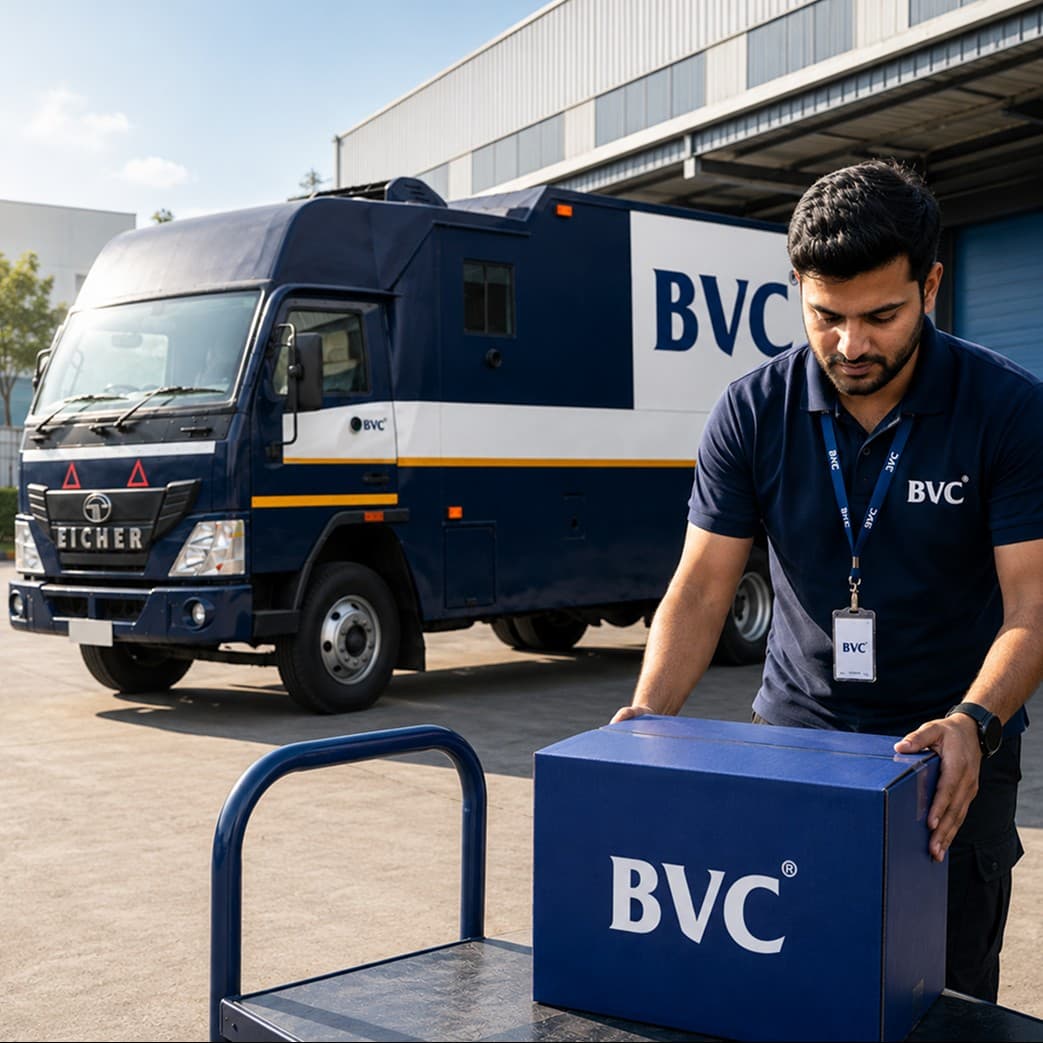
Bullion is the raw material of jewellery. If it doesn't reach the manufacturer on time, nothing else in the factory can move.
Learn More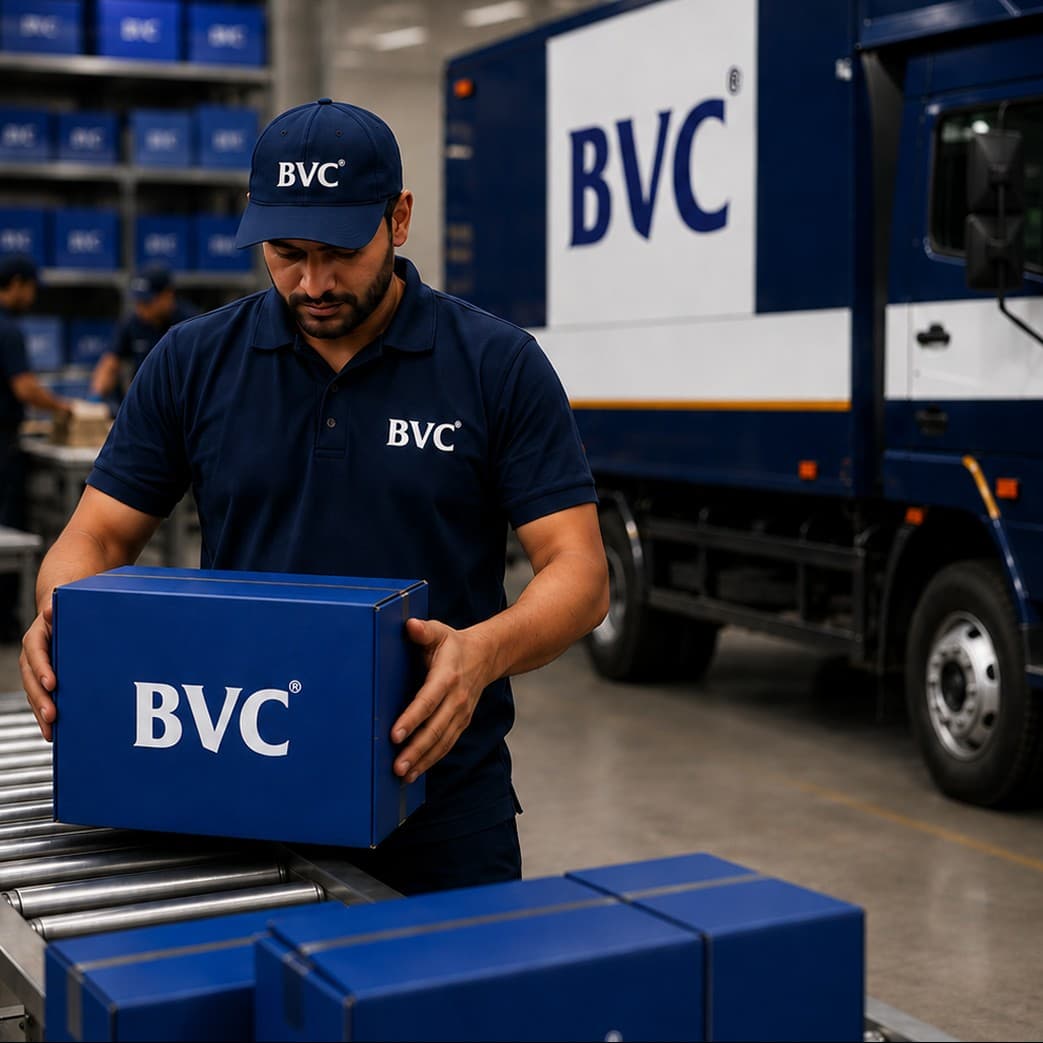
The bullion journey doesn't start on a truck — it starts at a mine. Dore bars move to a refinery, come out as bullion, sit in a strong room, and then get released against customer delivery orders.
Learn More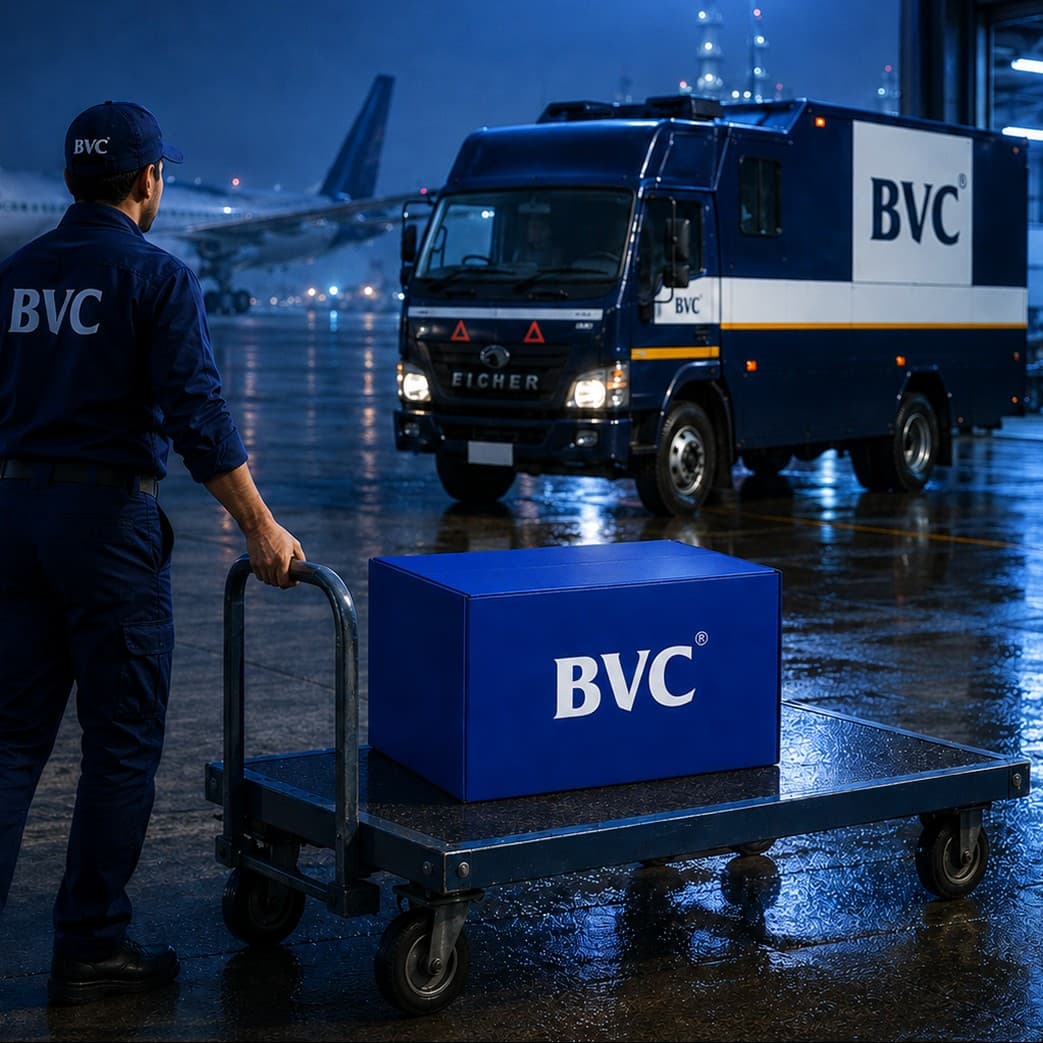
After bullion or doré arrives in India, refineries need the metal on the floor before the next shift. BVC takes charge immediately moving it under bullion-grade security, and delivering it to the refinery, round the clock.
Learn MoreEverything you need to know about moving old gold from multiple stores to a refinery with BVC. Can't find your answer? Reach out and our team will help.
Ask Your QuestionYes. BVC builds a store-wise pickup plan with you before any movement — mapping each store's name, address, contact person, expected parcel count and refinery destination. Pickups across metros and nearby cities are coordinated through a single point of contact, so you are not arranging transport store by store.