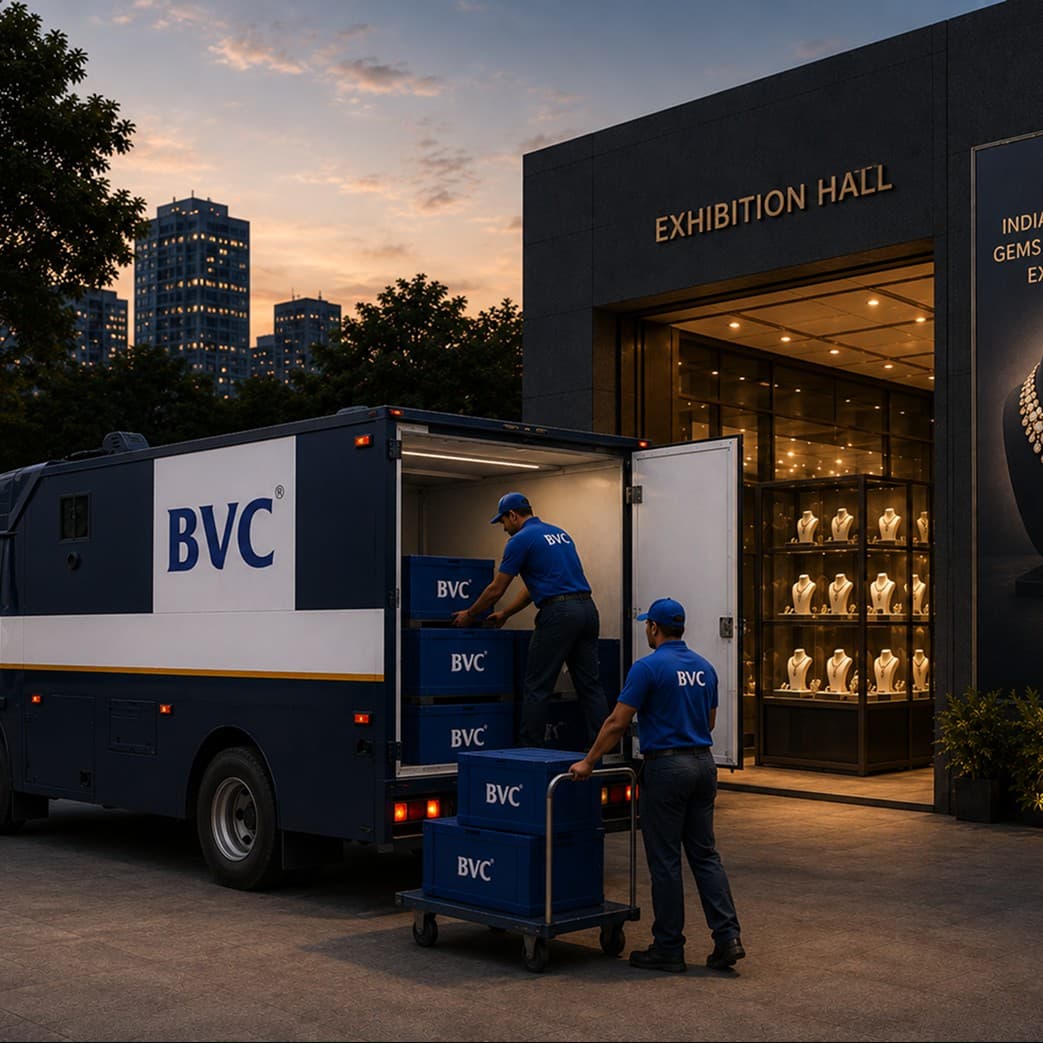
A jewellery brand has around 40 to 80 top clients. Once or twice a year, the brand throws a private viewing in a big city. A hotel suite, a client list, a curated collection of pieces that were never on a public shelf. Now imagine they want to do this in three cities on three days — say Mumbai, Delhi and Hyderabad.
From a logistics view, those three cities are not just three stops. They are three different state jurisdictions in India — Maharashtra, Delhi-NCR, Telangana. Every time high-value jewellery crosses a state border in India, it needs its own e-way bill, a valid invoice or delivery challan, and insurance paperwork that matches the declared value. Any piece that gets sold on the spot to a client needs its own GST-compliant sale invoice, generated instantly.
And here is the catch: all of that paperwork has to reconcile. What left the vault, what was displayed, what was sold, what was returned — it all has to match, across every leg. If the numbers don't line up, a tax notice can land on the brand's desk weeks after the event is over. That is the real problem. Not the shipping. The documentation.